


| Sr. No. | Grade | Book List | Syllabus |
|---|---|---|---|
| 1 | Montessori | Click Here To Download | Click Here To Download |
| 2 | Nursery | Click Here To Download | Click Here To Download |
| 3 | LKG | Click Here To Download | Click Here To Download |
| 4 | UKG | Click Here To Download | Click Here To Download |
| 5 | Grade 1 | Click Here To Download | Click Here To Download |
| 6 | Grade 2 | Click Here To Download | Click Here To Download |
| 7 | Grade 3 | Click Here To Download | Click Here To Download |
| 8 | Grade 4 | Click Here To Download | Click Here To Download |
| 9 | Grade 5 | Click Here To Download | Click Here To Download |
| 10 | Grade 6 | Click Here To Download | Click Here To Download |
| 11 | Grade 7 | Click Here To Download | Click Here To Download |
| 12 | Grade 8 | Click Here To Download | Click Here To Download |
| 13 | Grade 9 | Click Here To Download | Click Here To Download |
| 14 | Grade 10 | Click Here To Download | Click Here To Download |
| 15 | Grade 11 | Click Here To Download | Click Here To Download |
| 16 | Grade 12 | Click Here To Download | Click Here To Download |
Kindergarten Programme
Building a strong foundation through play, creativity, and holistic learning for children in their early years.The programme imparts linguistic, creative, numerical, social, motor, psychomotor, and kinesthetic skills leading to the development of intellectual, physical, cultural, artistic, and communication abilities in a free and stimulating environment. Nature walks and regular educational tours develop a sense of openness towards the world. The focus is on developing communication skills and reinforcing an innate sense of discovery in everything that is taught.
Kindergarten is a place where a child feels at home away from home, giving them a head start for their formal education.
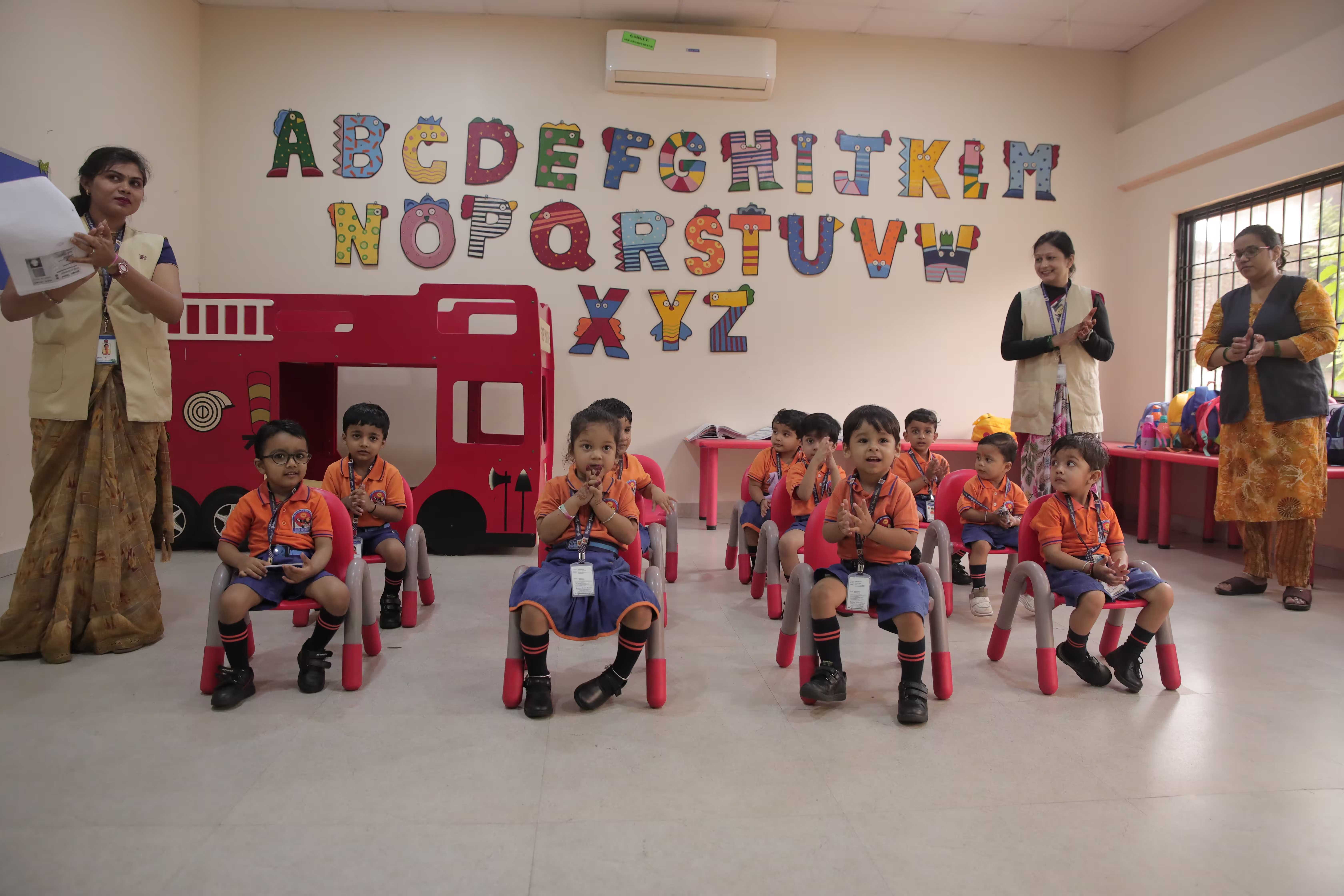
The Kindergarten Section includes Montessori, Nursery, LKG, UKG, Grade 1 & 2. It is organized to welcome the children in the best conditions while respecting the educational needs of every child. Well-trained teaching faculty gives special emphasis on the emotional, intellectual, and physical development of each child with individual attention and personal care.
The warmth and supportive atmosphere of home is replicated here. A child’s natural curiosity and joy in exploring its environment is given full freedom. The play-way methodology along with stories, music, dance, rhymes, group activities, and physical education are incorporated in the syllabus. Stage activities help children develop their talents, overcome stage fear, and build confidence.
Children are trained in conversation and story narration. Activities like building with blocks, puzzles, reproducing shapes and patterns, and stringing beads help develop hand-eye coordination. Kindergarten improves children’s prospects for success in school and helps them make a smoother transition to Grade 3.
Skills We Focus On:
- Classification skills
- Conversational skills
- Drawing conclusions
- Experimenting
- Identifying patterns
- Motor skills
- Social behaviour
- Observation and recognition skills
- Observing and relating skills
- Ordering and sequencing
- Sorting and classifying
- Thinking skills
- Understanding concepts
- Vocabulary enhancement
Primary Level (Classes III to V)
Building strong foundations through experiential learning, conceptual clarity, and holistic development of essential life skills.At this stage, the curriculum supports experiential learning and focuses on conceptual clarity by relating learning to everyday life. It aims to develop thinking and analytical skills while nurturing the affective domain of learners through activities that build basic life skills such as self-awareness, effective communication, and emotional strength.
The pedagogy is flexible and multi-dimensional, providing ample opportunities for exploration and discovery rather than sticking to a fixed or rigid structure.
Learning Areas Include:
- Languages (English, Hindi): Develop listening, speaking, reading, and writing skills; acquire a wide range of vocabulary; improve interpersonal communication. The third language is introduced in Class V. Languages are taught through engaging activities to make learning fun, with a structured syllabus introduced at the upper primary stage.
- Mathematics: Learn number operations, understand shapes, identify similarities and differences, collect and analyze data, and recognize patterns in shapes and numbers.
- Environmental Science/Science, Social Studies: Encourage awareness of surroundings, appreciation, and sensitivity toward environmental issues—natural, physical, social, and cultural.
- Information & Communication Technology: Develop technological skills essential for the modern world.
- Visual Arts & Performing Arts: Foster creativity and artistic expression.
- Physical & Health Education: Promote fitness, coordination, and healthy lifestyle habits.
- Life Skills & Value Education: Instill values, emotional intelligence, and practical life skills for holistic growth.
Middle Level (Classes VI to VIII)
Fostering analytical thinking, communication skills, and personality development through structured learning and hands-on experiences.The middle schooling phase extends from Classes VI to VIII and marks a crucial period in a child's educational journey. The academic programme is designed to develop formal study skills and strong work habits, as the demands of examinations become more immediate. Classroom strategies like pair work, group discussions, and role-play activities are employed to enhance communication skills and interactive learning. The focus remains on building in-depth conceptual understanding while also emphasizing personality development, value education, and the ability to cope with peer pressure.
A key objective at this stage is to allow students to explore their interests and harness their talents constructively. Logical and categorical thinking is encouraged, supported by state-of-the-art infrastructure such as libraries, multimedia halls, and laboratories. These resources help students complete projects, conduct experiments, and study complex concepts effectively.
The core subjects offered at this stage include English, Mathematics, Hindi, General Science, Social Science, and Information & Communication Technology (ICT). In addition, students receive lessons in Work Experience, Art Education, Performing Arts, and Physical & Health Education, ensuring holistic development.
Secondary Level (Classes IX to XII)
Preparing students for board examinations, competitive tests, and future career paths with focused learning and synchronized study strategies.The secondary stage encompasses Classes IX to XII and serves as the critical threshold to higher education. During these four years, students are encouraged to focus on specific areas of specialization. Learning becomes more competitive and structured, with teachers recommending useful reading material and additional texts to deepen subject knowledge. Professional career counseling and guidance for higher education form an integral part of this phase.
Students prepare for the CBSE examinations, a prestigious school-leaving examination recognized nationally and internationally, alongside developing readiness for the challenges of higher education. To reduce stress and maintain balance, the concept of synchro-study has been introduced, ensuring synchronization between the curriculum for board examinations and competitive entrance tests.
At this level, students have complete access to specialized laboratories and extensive library resources, designed to meet their research and advanced study requirements. This comprehensive approach equips learners with the knowledge, confidence, and skills necessary to excel in both academic and competitive arenas.
No Bag Day – A Day of Experiential Learning
At BPS Korba, No Bag Day is a unique initiative that allows students to learn beyond books through fun, interactive, and practical activities. This special day reduces stress, fosters creativity, and makes learning a truly enjoyable experience.
Exciting Activities on No Bag Day Include:
Students engage in gross motor and fine motor activities to improve coordination and strength.
Sensory development sessions help enhance observation and response skills.
Cognitive skill-building exercises encourage logical thinking and problem-solving.
Enjoyable pre-math concept activities make numbers fun and easy to understand.
Storytelling sessions spark imagination and improve communication skills.
Creative art and craft workshops bring out the artist in every child.
Visits from community helpers provide real-world knowledge and values.
Physical training and yoga sessions promote fitness and mindfulness.
Entertaining movie sessions make learning visual and engaging.
Classical games and competitions add fun and team spirit to the day.
Field trips and nature walks connect students with the environment.
Stage appearance opportunities build confidence and public speaking skills.
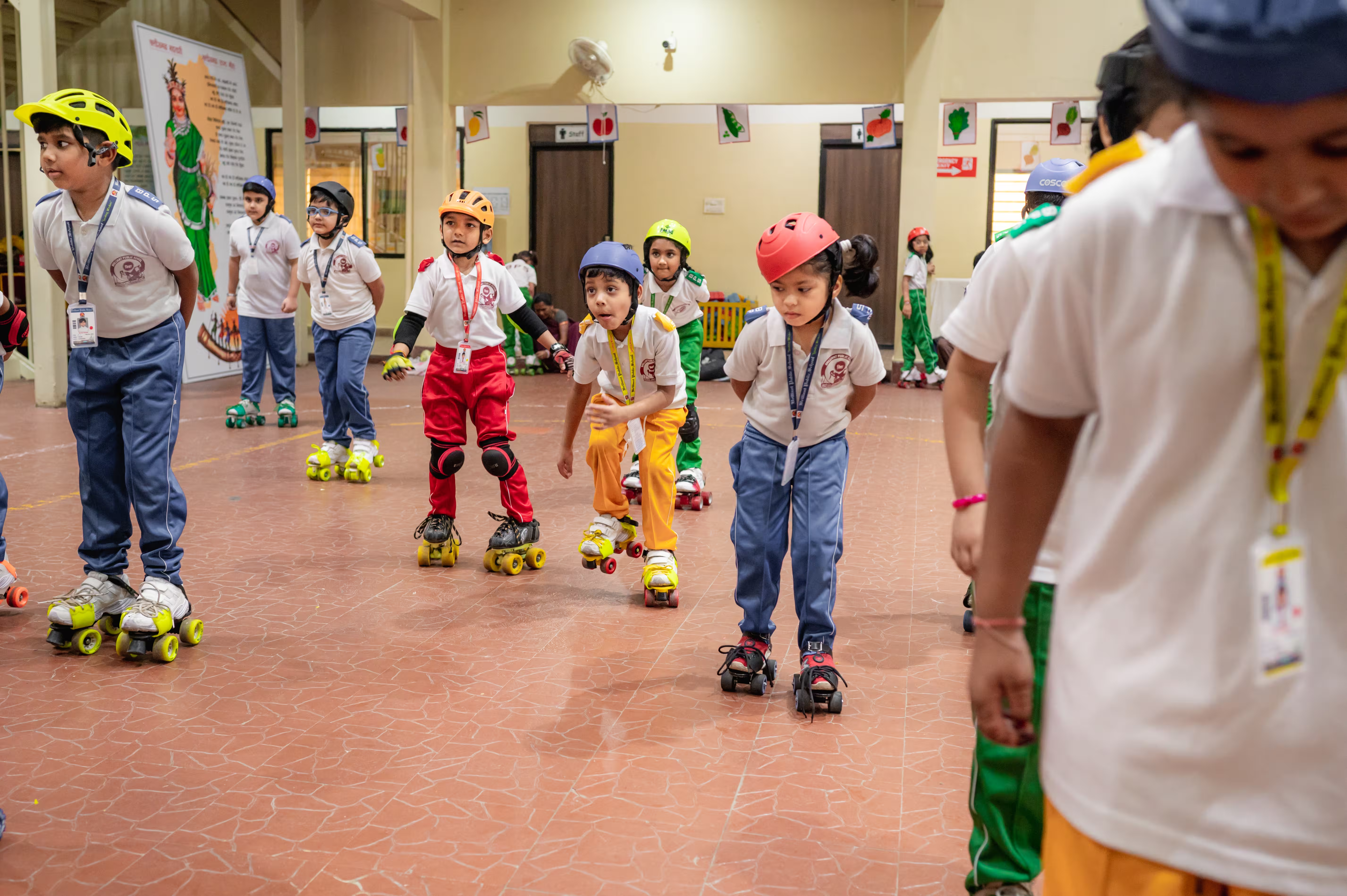
Thematic Day: Learning Beyond Books
At BPS Korba, we celebrate Thematic Day every week for primary students, where a unique theme transforms the classroom into an interactive learning hub. On this day, students leave their bags at home and step into a world of creativity and exploration.
The day follows the regular schedule but introduces lessons through learning by doing, using engaging activities and practical experiments. This hands-on approach makes complex concepts easier to understand and far more enjoyable.
By removing the burden of books, Thematic Day reduces stress and promotes joyful learning. The activities leave a lasting impression, helping students develop critical thinking, creativity, and real-world application skills.
Find Answer Of Your Questions
Our Kindergarten Programme follows the ‘Learning by Doing’ pedagogy — a fun-filled and experiential approach that promotes play-way learning, storytelling, creativity, and activity-based education. Children develop gross and fine motor skills through hands-on experiences, art, music, and movement.
Each day is celebrated with meaningful themes that connect children to values, culture, creativity, and curiosity, helping them learn joyfully in a nurturing and stimulating environment.
‘No Bag Day’ is observed once a week from Montessori to Grade III to promote stress-free, experiential learning. On this day, students bring only their tiffin, water bottle, and basic art or craft supplies as suggested by teachers.
The day is dedicated to fun-based activities, games, projects, and hands-on experiences that enhance creativity, confidence, communication, and 360° holistic development of the child.
Thematic Days are special learning days designed to make education exciting and concept-based.
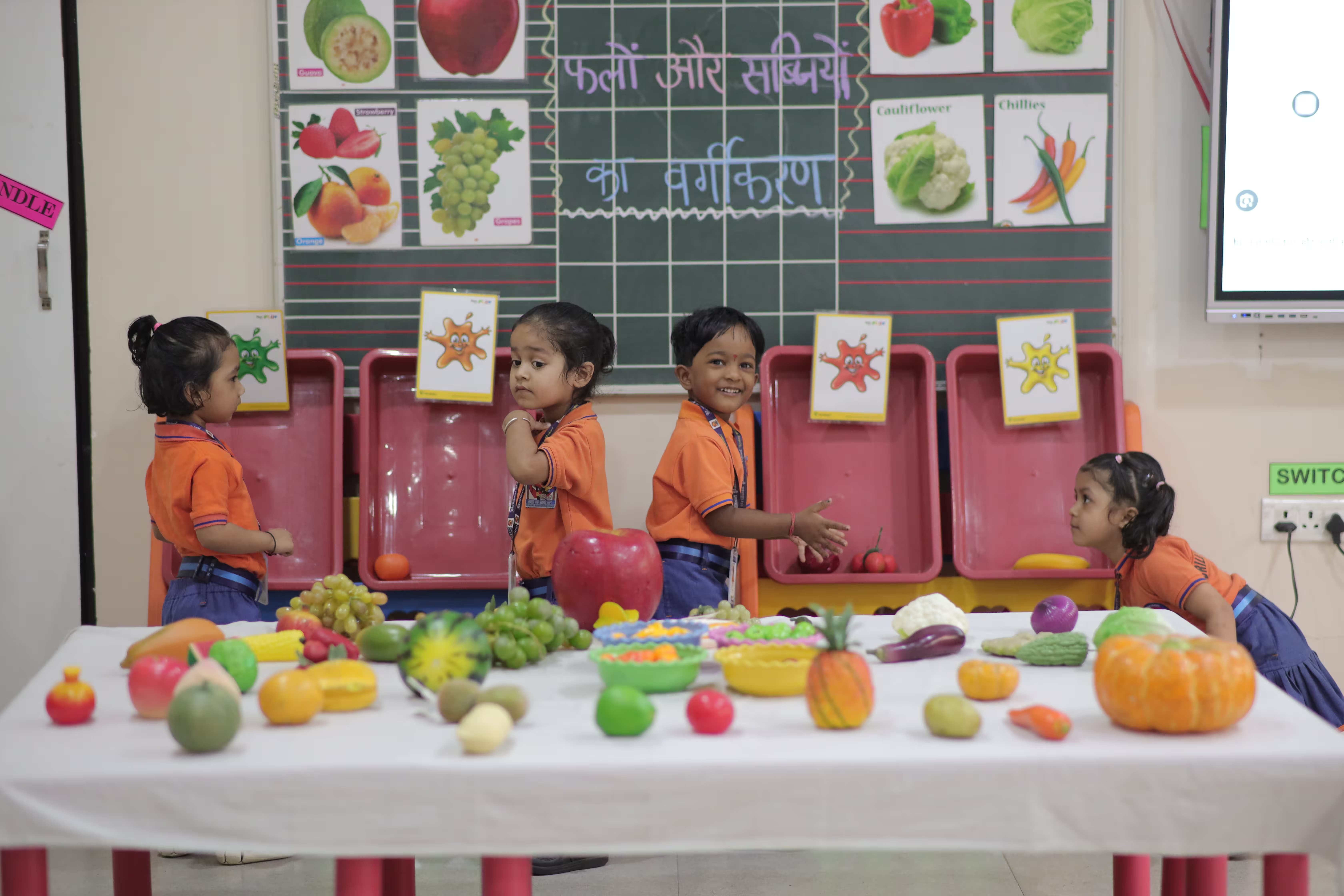
- In Kindergarten, themes revolve around shapes, colors, phonics, community helpers, fruits, vegetables, and more.
- For Grades I–III, the themes are linked to grammar topics, environmental awareness, math concepts, and Hindi language learning.
- For Middle and Secondary levels, the focus shifts to learning by doing, practical learning, lab activities, and educational field trips, allowing students to explore subjects deeply and meaningfully.
Brilliant Public School emphasizes practical understanding through Science experiments, Math Lab activities, Social Studies projects, and field excursions.
Students are encouraged to apply classroom concepts to real-life situations, developing critical thinking and problem-solving skills. The school’s advanced laboratories and innovative teaching aids support deeper conceptual learning.
Sports and co-curricular activities form an integral part of our curriculum. Students participate in indoor and outdoor games, yoga, martial arts, athletics, and inter-house competitions. These activities promote team spirit, discipline, leadership, and physical fitness, ensuring the holistic development of every learner.
The school uses smart classrooms, digital boards, audio-visual learning tools, and educational apps to make lessons interactive and engaging. Technology integration helps students visualize abstract concepts, enhance digital literacy, and stay connected to modern learning methods.